Profonde Musique
Feb 10, 2026
Part II
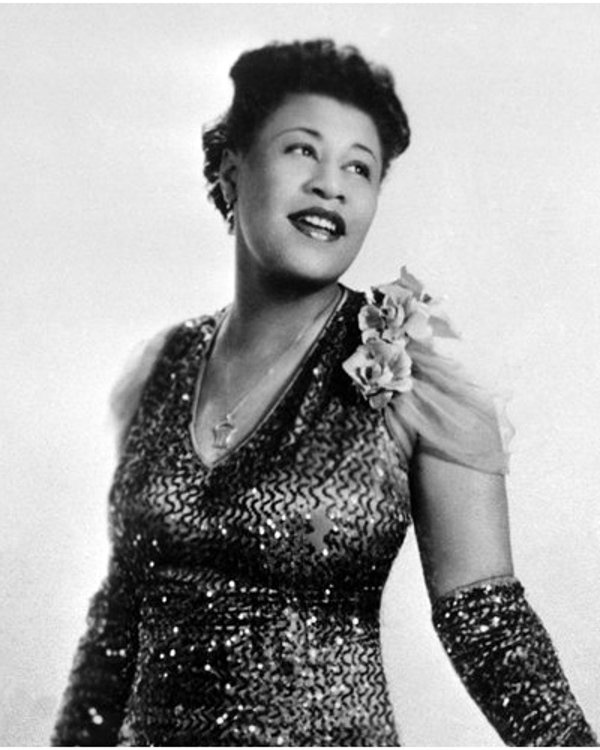
I continue my month-long exploration and celebration of just some of the major Black forces in all genres of American music to commemorate Black History Month. The notable and laudable voices, musicians, innovators and influencers, the trailblazers filled with instinct and guile, but most of all courage, as every one of them strived to overcome hardship due to systemic racism to bring forth the most original and dynamic music of the age.
Sly
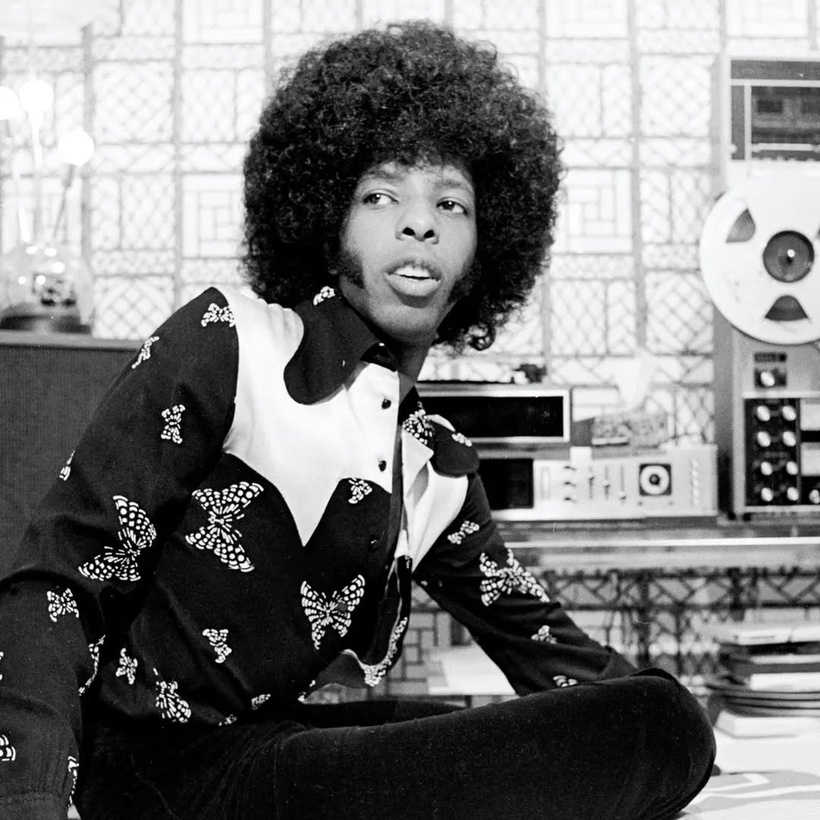
Sylvester Stewart aka Sly Stone, a true hyphenate, was a DJ, promoter, multi-instrumentalist, songwriter, producer, and most famously formed pop music’s most successful multi-racial, inter-gender band, Sly and the Family Stone. The master pioneers of funk, soul, rock, psychedelia, and pop from the mid 60s into 1970s, the band also managed to fuse political and social consciousness with communal themes to expand the reach and purpose of their music. Much of this music was written, arranged and produced by Sly, using his encyclopedic knowledge of gospel, soul, rock, and the initial strains of funk to form a hybrid collective to conquer uncharted sonic territory.
Moreover, Sly and the Family Stone released mega hits the moment they formed – “Everyday People,” “Hot Fun in the Summertime,” “Thank You (Falettinme Be Mice Elf Agin),” “Stand,” “Everybody Is a Star,” “Dance to the Music” – and more. After playing what was the best set of anyone at the generation-defining Woodstock, Sly was the leading man in the most dynamic and popular band in America. The enormous reach of the entire Family Stone catalog continued to influence artists well into the 1980s, more specifically the Jackson 5, Fleetwood Mac, George Clinton & Parliament/Funkadelic, Prince, Arrested Development, the Black Eyed Peas, Living Color, and beyond.
The Bird
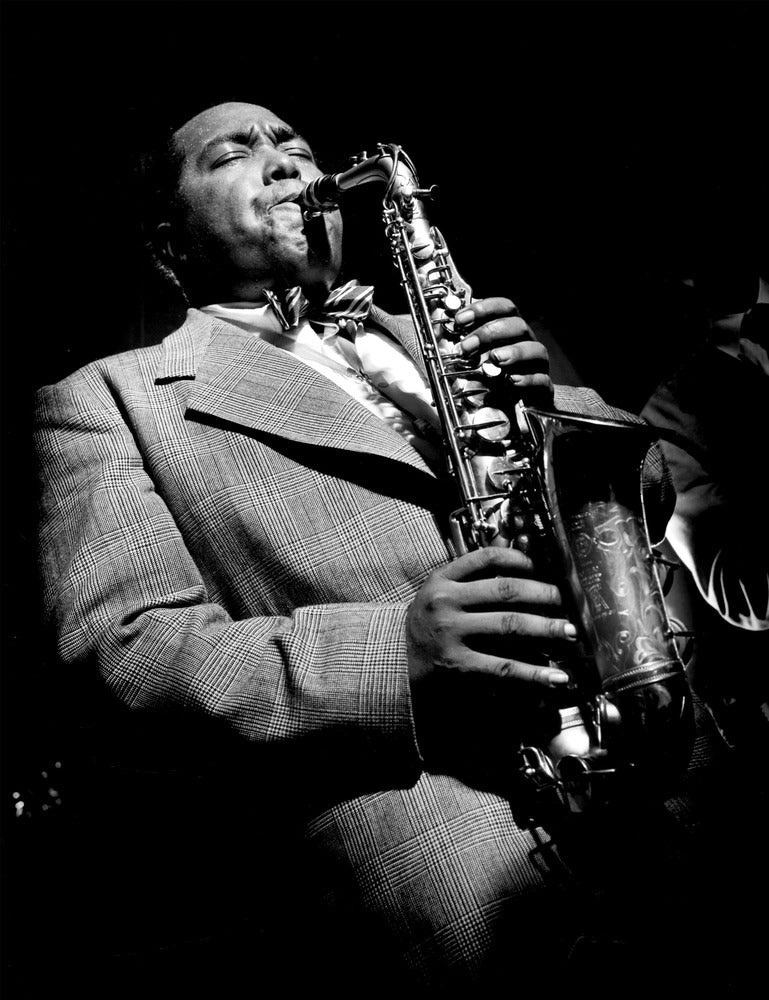
As the story goes, Charles Parker Jr. invented be bop, a morphing of traditional jazz stylings sped up, turned upside-down and inside-out, causing players, in his case, the alto saxophone, to unleash their inner demons and angels. It sparked a literary, musical, fashion, and cultural movement in the middle of the American century throughout the Black community and exploded into the mainstream on the heels of a series of outstanding seminal performances and live albums that changed the face of jazz and even popular music turning The Bird, as he was known, into a symbol of hipster cool for the Beat Generation starving for authentic and uncompromising artistry.
Most of this took place in the 1930s when Charlie was impossibly young and naïve enough to ignore aural parameters and chart a new course to experimental grooves. By 1940 and his pilgrimage to New York City, more specifically Harlem, he forged these paths with such burgeoning acolytes as trumpeter, Dizzy Gillespie, pianist Thelonious Monk, guitarist Charlie Christian, and drummer Kenny Clarke. This journey culminated in November of 1945 with The Charlie Parker Story, an album that compiled what many jazz historians consider the “greatest Jazz session ever,” featuring Charlie leading sidemen, Gillespie, a young Miles Davis on trumpet, Curley Russell on bass, and Max Roach on drums.
Battling health issues, much of it due to alcohol abuse and depression due to personal tragedies in his family life, Charlie would die at just age 34 having changed the world of music with a courage and foresight rarely displayed in any musical genre.
Sista

Sister Rosetta Tharpe is a pathetically underrated giant of rock and roll guitar. She was one of the most important pioneers of blues and rock playing, instituting the type of formative histrionics associated with guitar gods of the future. To watch Rosetta play is to peruse the roadmap for the electric instrument that would dominate the latter half of the 20th century in popular music. There isn’t one artist who plays electric, blues-oriented riffs that doesn’t owe a debt to Rosetta.
Born in 1915 and gaining popularity during the 1930s – she is one of the first artists to nail the gospel-blues standard, “This Train,” her virtuosity so ahead of its time, she mesmerized audiences – this was especially seismic coming from a woman, as down through the years, so many female musicians have been sadly overlooked for their musical prowess. But the legendary Muddy “Mississippi” Waters recognized her stellar chops, so much to he asked her to join him on one of the most important blues tours of the UK, wherein Rosetta blew the minds of no less than Eric Clapton, Jeff Beck, and Keith Richards, all of whom cite that show and her magnificent playing as a heavy influence.
Ms. Tharpe died in 1973 at just 58 years-old leaving a legacy of integrity, ingenuity and prowess on the instrument that defined rock and roll.
Prince of Soul

The multi-talented and sultry-voiced Marvin Gaye, singer-songwriter, multi-instrumentalist, and record producer, was Motown founder and president, Barry Gordon’s “secret weapon,” who did it all – played drums on a myriad of hits, as well as sang backup to many more, recorded big hit duets with several female vocalists – most notably Mary Wells and Kim Weston – and eventually wrote and performed seminal hits for himself and others at the label.
The undisputed “Prince of Soul,” Gaye helped alter the sound of the early 1960s as the American, Black, and soulful alternative to the ubiquitous British Invasion. His slithering song of paranoia and spite, “I Heard It Through the Grapevine” in 1968 hinted at his marrying personal angst with greater social concerns of the Black and youth communities of his generation, and later his “How Sweet It Is (to Be Loved by You)” added to his legacy as an ear-candy master, both songs copiously covered by many artists in the years to come.
Marvin’s most lasting statement, of course, was his stirringly intense album with its title track, “What’s Going On,” which in 1971 dramatically shifted the please-first Motown focus to consider the changing times, both politically and culturally, reaching the summit of Rolling Stone magazine’s latest Top Albums of All Time list. He still found the time to unleash one of the sexiest songs by a male vocalist, his 1973 soulful tour de force, “Let’s Get It On.” Later in the 1970s, Gaye influenced two of the main artists of the coming generation, Michael Jackson (his Motown mate) and Prince, both of whom took small portions of his 1977 epic funk masterpiece, “Got to Give It Up” as precursors to their future hits. Infamously, Robin Thicke and Pharrell Williams took their homage too far and were sued by Gaye’s family and eventually lost.
Until his tragic death in the most horrible circumstances at only 44, murdered by his father, Marvin Gaye was a transformative artist whose influence continues to reverberate on the charts.
God’s Greatest Hitmakers

The roots of gospel music transformed into secular pop hits began with Ray Charles and Sam Cooke but was realized by the gospel/R&B stalwarts that spanned the early 1950s well into the 70s and beyond, the Staple Singers. Led by patriarch, guitarist and honey-voiced singer, Roebuck “Pops” Staples, and anchored by dynamic and emotive vocalist, his youngest daughter, Mavis, along with her elder sisters, Cleotha and Yvonne (brother Pervis was included periodically), they conquered many styles of American music from blues to country and rock and roll effortlessly, always lending their sultry harmonies and home-spun phrasing to each recording.
Their early gospel-heavy output with songs like “Uncloudy Day” and “Will the Circle Be Unbroken?” inspired scores of young musicians that would go onto dominate the second wave of rock music, including a high school aged Bob Dylan, who cited them as his earliest musical awakening. (Bob also had a huge crush on Mavis). Maneuvering through styles and dozens of record labels and producers, the family group never disappointed, always finding audiences, especially for their live act.
It took the group, however, until the early 1970s to gain their biggest hits, now under the name the Staples, most notably the soulful and funky “Respect Yourself,” “I’ll Take You There,” and “Let’s Do It Again,” which elevated them to national prominence. Their appearance on the Band’s magnificent concert film, The Last Waltz directed by Martin Scorsese, is one of its many highlights, as they recorded the quintessential version of the classic, “The Weight,” – another song inspired by their blues/gospel leanings.
To this day, at 86-year-old, Mavis Staples still performs and does it with the same fun-loving authentic panache as she did as a kid. The 2015 documentary Mavis! is a must-see for music fans and for people who want to be inspired and have a renewed and joyful respect for humanity.
Lead Belly

Arguably the most prolific early 20th century folk artist, Huddie Ledbetter’s story is one of tragedy and triumph. All of which was filtered into the prism of his music, played with reckless abandon on a twelve-string guitar and expressed with window-rattling vocals which was equal parts barrelhouse blues and heart-wrenching folklore.
Twice arrested for crimes he did not commit in the Jim Crow South, and forced to perform his tales of woe to two separate wardens, he so spectacularly floored them, he was released forthwith to roam the country and spread his tales of cotton fields and wayward characters that spawned everyone from Woody Guthrie to Bob Dylan to the Beatles, the Stones, Pearl Jam and Steve Wonder.
Also known famously by Lead Belly, a pejorative moniker he did not embrace, Huddie was a true songwriting master, many of his compositions becoming American canon, including but not limited to the tender, “Roberta,” the bouncy, “Rock Island Line,” the infectious singalong, “Irene,” the future rock staple, “Midnight Special,” and the confessional standard, “Nobody Knows the Trouble I’ve Seen.”
His work with the Lomax family to record and document late 19th into early 20th century country, blues and folk for the Library of Congress unfurled a treasure trove of this nation’s most original music. There are figures with statues in Washington D.C. with less credentials in the American story then Huddie Ledbetter.
The Voice

There are singers, and there are remarkable and seminal singers, and there are legendary singers of the highest talent and merit, but there is the only one Voice, and it belongs to Ella Jane Fitzgerald. Whether mastering jazz, blues, pop, gospel or soul, Ella’s distinct cadence and vocal calisthenics own every song and elevates the music to unimaginable heights. No matter what venue or place on stage, famously fronting crack bands led by Louis Armstrong and Duke Ellington for most of the 20th century, Ella was a preeminent interpreter of the Great American Songbook.
Born in 1917 and coming to prominence in the early 1940s, she earned several salutations as the “First Lady of Song” and the undisputed “Queen of Jazz,” and simply “Lady Ella,” her purity of tone, impeccable diction, phrasing, timing, intonation, absolute pitch, and a scat-improvisational talents set new standards, or really impossible ones, for anyone in her wake. For my money, her collaboration with the Duke at the Cote D’Azur club on the French Riviera in 1967 is some of the finest vocal impressions and melodic elasticity known to the form. After playing selections of the recordings on our former podcast, Underwater Sunshine a few years back, my pal, Adam Duritz and I waxed gushing poetic about her magnificence. I believe my lasting comment was “She is not the same species as us mere mortals.”
Recent Comments
Categories