Profonde Musique
Feb 3, 2026
Part I
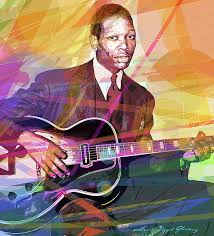
The wholly original American music– jazz, bebop, blues, rock and roll, hip hop – was invented, created, cultivated and evolved in the Black community, later appropriated (and I do not use this pejoratively, but it’s true) by poor Whites and then exploited by mostly White managers, agents, radio personalities, record executives, and publishers. The music transformed, as did America, from rural explorations into big city, big business ratings, charts, awards, etc. But at its core, the music of America, seeded and blossomed from the Black experience, continued unabated to excite, influence, and expand the art form into unimaginable realms.
Overcoming the horrors of slavery, America’s original sin, to lynching, Jim Crow, segregation, ghettos, systemic, economic and geographical racism, which were exacerbated by poverty, crime, substance abuse, and the cyclical rise and fall of deep-seated White nationalism that is as prevalent in America’s story as is its democracy, came the voices of titans, preternaturally talented and overtly revolutionary.
Over the next four weeks, I hope to concentrate on those towering figures of the African American musical landscape that sparked the rhythmic, melodic foundation in song, dance, fashion, language, and instrumentation for generations of every race to enjoy, explore and expound upon.
Lady Day
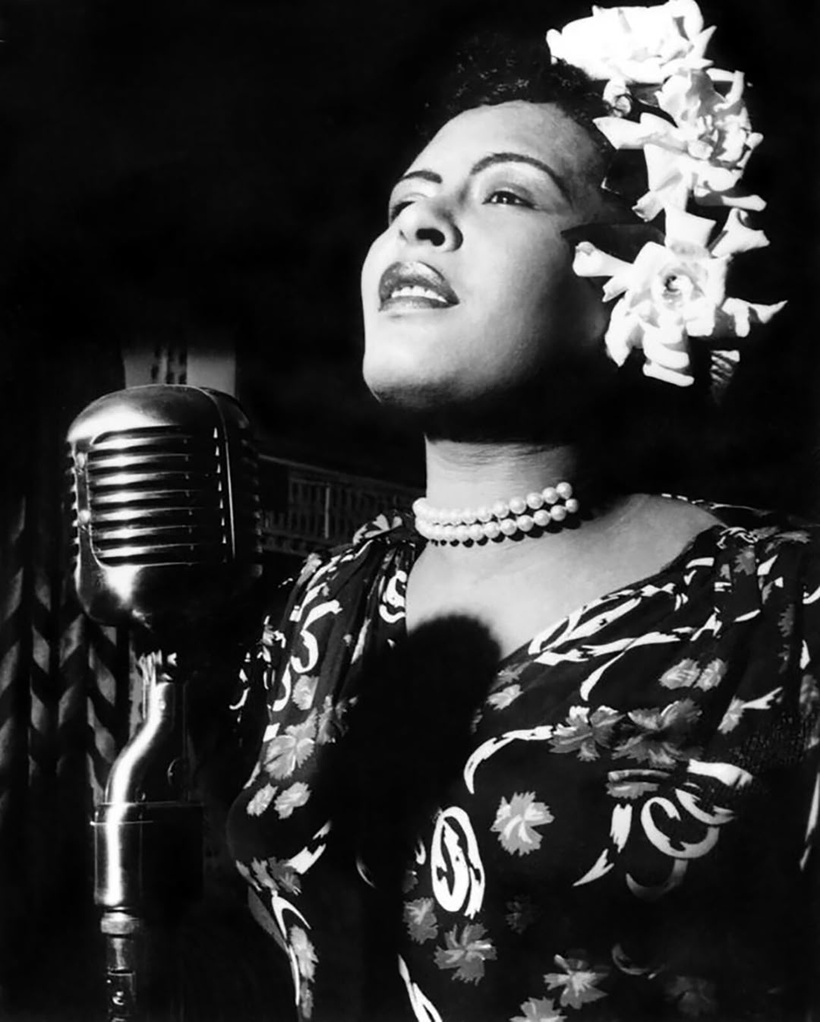
The sultry, sad, beatific majesty of Billie Holiday, the early 20th century’s finest female torch songstress, maintained solid footing in both jazz and blues. A standout in nightclubs and theaters, she could silence an intimate venue fronting a small ensemble with her melancholy voice or overwhelm a bandstand belting from her core before the celebrated ensembles of Count Basie and Artie Shaw.
In 1936, Billie turned popular music on its head, singing the provocative anti-racist song, “Strange Fruit,” a commentary on lynching in the South by a Bronx-born Jewish songwriter by the name of Abel Meeropol at Greenwich Village’s Cafe Society club. Arguably the most important song written in the American century, the ensuing recording of the controversial composition was at the very least the period’s most seditious and revolutionary musical statement by an American songwriter beyond Woody Guthrie’s “This Land is Your Land.” Billie’s performance that evening was an explosive expression of pained retribution echoed down the corridors of time.
And while she lived a difficult life battling drug addiction and suffering from poor business decisions, she managed to always embed in song a spine-chilling declaration of anguished beauty that never failed her.
Godfather of the Electric Guitar
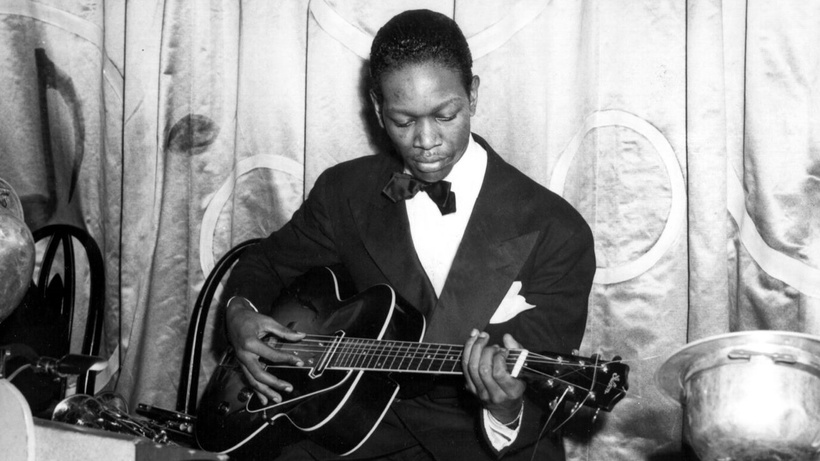
Charlie Christian, the first national guitar hero, single-handedly popularized the electric guitar in the late 1930s, becoming a key figure in the development of bebop and cool jazz. An integral cog in the Benny Goodman Sextet and Orchestra, the first American integrated ensemble, his single-string technique combined with amplification helped bring the guitar out of the rhythm section and into the forefront as a solo instrument.
In 1939, Christian’s playing on Goodman’s “Rose Room” was an immediate sensation and today is considered a cornerstone of swing guitar, showcasing Christian’s mastery of melodic phrasing, triplet runs, and chord-tone improvisation; in other words, the template for electric guitar mastery. He was a national sensation and a massive star all before the age of 25, when he tragically succumbed to tuberculosis. Who knows what kind of effects his talent could have had on the next iteration of American music, which for the latter half of the 20th century was dominated by the electric guitar. But make no mistake, there is no Chuck Berry or Jimi Hendrix, Eddie Van Halen or really any notable electric guitar slinger without the sonic path forged by Charlie Christian.
King of Soul
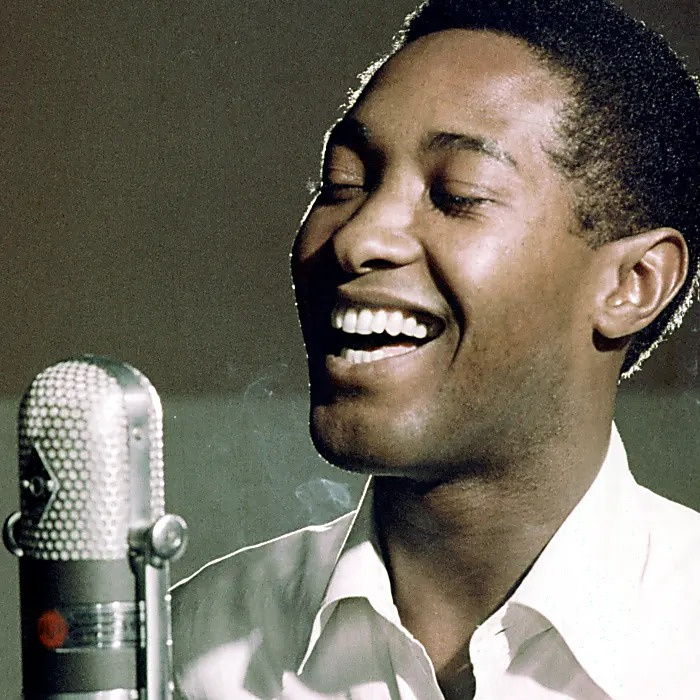
Sam Cooke’s career spanned the entire scope of music. He was a ground-breaking singer, beginning in 1950 as a gospel standout with the legendary Soul Stirrers, then later in the decade when he became an instinctual pop composer that achieved unprecedented success. Throughout, he was a consummate and impassioned performer in both the posh, White, urban scene and an underground blues wailer in the sweaty, Black clubs throughout the famed Chitlin ’Circuit. In an industry rife with racist constructs, Cooke became a meticulous producer of his own and others work, a mentor and manager of new and raw talent, and a powerful and innovative record mogul until his mysterious death by murder in 1964 at age 33.
A resounding voice in the Civil Rights movement and as a young Black man having creative and business control of his art and image, Cooke stood tall as an undeniably significant precursor to the rise of Barry Gordy at Motown, as well as contemporary artists like Ray Charles and future multi-faceted Black artists/entrepreneurs like Prince, Dr. Dre and Jay Z.
Cooke’s musical output in his short time dominating the charts is Herculean and vast with seminal hits like the lush, “You Send Me,” the playful, “Cupid,” the infectious, “Chain Gang,” the stirring, “Wonderful World,” the fun-loving, “Another Saturday Night,” and the one that hit the year I was born, “Twistin’ the Night Away.” His most prominent contribution to the American musical and social landscape, “A Change is Gonna Come,” is simply one of the greatest songs ever written and performed, a thing of magnificent exquisiteness, which unfortunately was released after his death.
Sir John
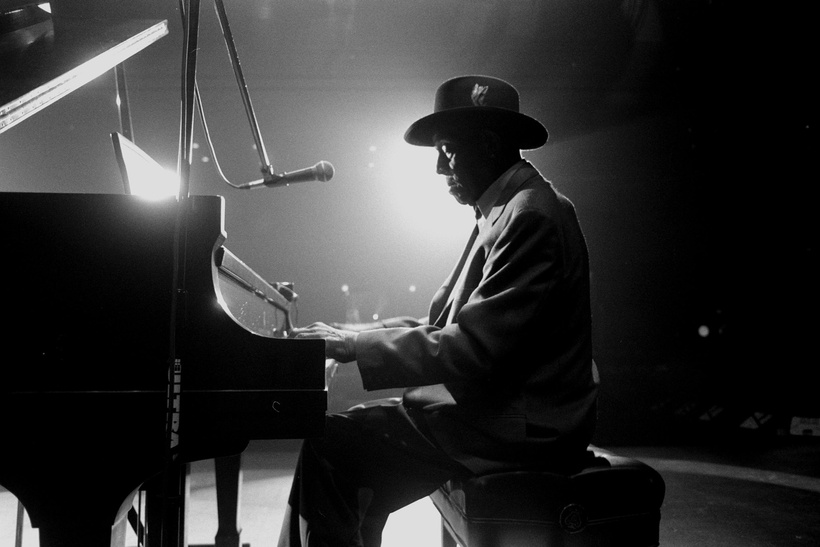
And now to the criminally underrated and under-appreciated Johnnie Johnson, the musical genius behind rock and roll’s first poet laureate, Chuck Berry. His notoriety as pianist extraordinaire only scratches the surface of Johnson’s considerable mark on American music and the early foundation of latter 20th century pop music. You see, it was Johnnie Johnson who had the Sir John Trio that welcomed in an eager and ready young guitarist to give the otherwise jazzy ensemble a little St. Louis boogie, and so as Berry developed a style that would come to define rock guitar forevermore, it was Johnson by his side developing that uniquely legendary sound.
Berry’s most beloved and groundbreaking records from the chugging, “Maybellene” to the iconic “Roll Over Beethoven” (the first song to celebrate the new musical style), to the relatable, “School Days,” the seductive “Carol,” the era-defining, “Johnny Be Goode” and much more have the stamp of Johnnie Johnson’s piano driving the tunes as Berry grooves and noodles and scats his brilliant lyrics above them. All of Berry’s compositions were in piano keys, leading many to surmise that Johnson had more than a little to do with Berry’s songwriting.
Johnson would go on to record and tour with Berry for years before the two had a falling out due to Johnson’s drinking problem and undue credits to his work, which would rage on for decades. But make no mistake, there is no Chuck Berry as we know him – arguably the father of rock and roll – or even that genre without the talent and ingenuity of Johnnie Johnson and his amazing piano playing and musical foresight.
Queen Tina
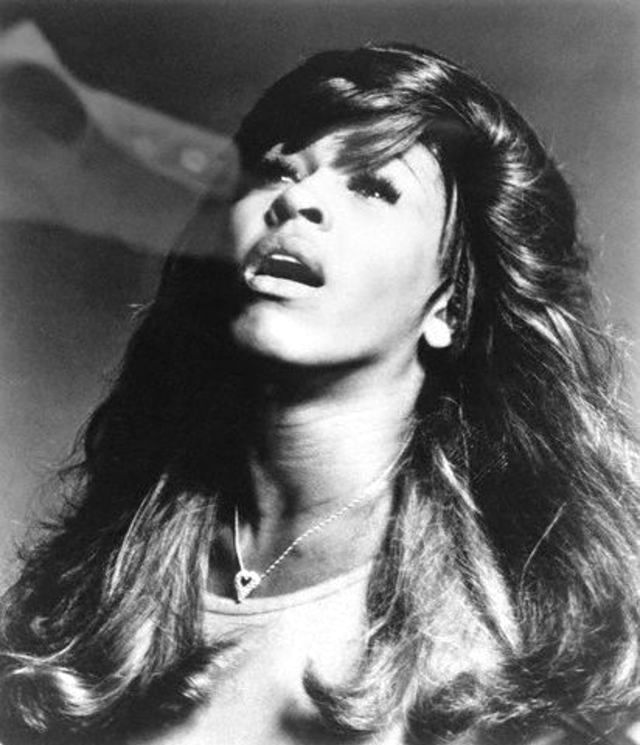
Beyond her incredible voice, dynamic dance moves, commanding stage presence, and preternatural abilities to own songs, the Queen of Rock & Roll, Ms. Tina Turner is a symbol of survival and strength for women everywhere, as she overcame personal hardships and many barriers both social and racial to forge a career that included several comebacks, most of all her dominant return to the top of the charts in the 1980s, decades after breaking through with her husband, bandleader, and one of the pioneers of rock, Ike Turner.
The tumultuous and abusive Turner, inspired Tina’s early career while simultaneously causing her mental and physical traumas through several difficult years during which the two helped lay the groundwork for a genre of music they invented, providing a roadmap to the British Invasion and later the artists who combined unforgettable performance with a myriad of musical styles.
Aside from James Brown, no one worked a stage like Tina Turner, from her earliest days as a teen sensation well into her forties. Her vocal calisthenics in early performances of “A Fool in Love” circa 1960 is mind-blowing enough but her choreography with the Ikettes whilst dancing wildly on high heels and tight dresses is nothing short of super-human.
During her transition from escaping the horrors of Ike and preparing for her final splash upon pop culture, I saw Tina in 1981 open for the Rolling Stones in New Jersey. She was magnificent, and I still recall fondly her reinventing the Beatles’ “Help” as a slow, emotive blues.
Tina Turner was more than a musical giant and female icon but a force of nature, a Black woman who showed the way forward to not only survive male toxicity but thrive in a world set up to restrain her.
Funky Drummer
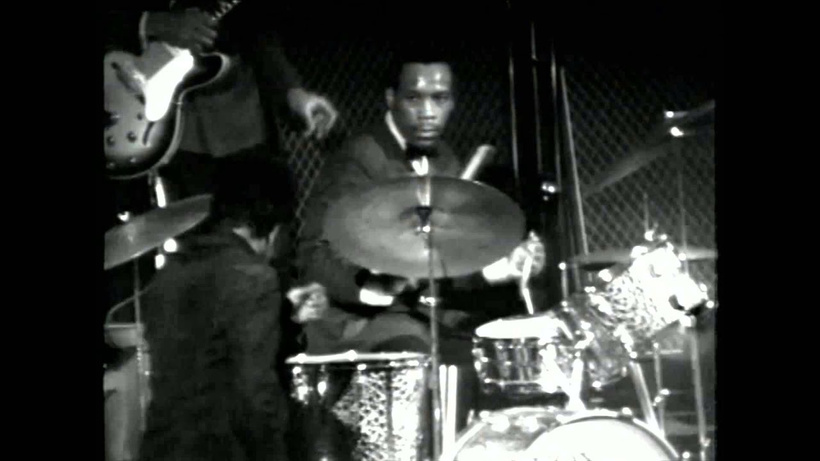
Hands down my favorite drummer of all time, Clyde Stubblefield was best known for his work with James Brown’s band during the Godfather of Soul’s most prolific and groundbreaking period of 1965 through 1970 in which he acted as the rock-steady backbeat to an incredible cadre of musicians that invented funk – much of it live in the studio as Brown barked out instructions and the band responded as if a left/right brain. The best example of this period resides on In the Jungle Groove, a 1986 revised compilation of Brown’s in-studio compositional process, which was built upon Clyde’s indelible rhythms.
During his time with Brown, Stubblefield was the backbone of perennial funk workouts, “Cold Sweat,” “I Got the Feelin,’” “Give It Up or Turnit a Loose,” “Say It Loud – I’m Black and I’m Proud,” “Mother Popcorn,” “Get Up, Get into It, Get Involved,” “There Was a Time,” “Ain’t It Funky Now,” and the brain-melting album, Sex Machine.
But, let’s face it, Clyde originated the most imitated, duplicated and, most of all, sampled rhythm pattern ever on Brown’s 1970 track, “Funky Drummer.” Used for decades by hip hop groups and rappers such as Public Enemy, Run-DMC, N.W.A, Raekwon, LL Cool J, Beastie Boys, as well as pop artists like Sinéad O’Connor, and Prince, as well as a host of other genres.
Clyde had a pocket style that was all his own – a powerful bass foot and supple wrists on ghosting notes that drove the band’s coolest jams and helped to inspire James Brown to new and unmatched heights. Quick hitting fills that never drew attention to his instrument, Clyde not only served songs and drove their purpose, but held his ground to allow others to lay down grooves. He was and is the OG, as much a partner in creation for James Brown as Johnnie Johnson was with Chuck Berry on his foundational rock and roll records of the 1950s.
Recent Comments
Categories