Profonde Musique
February 24
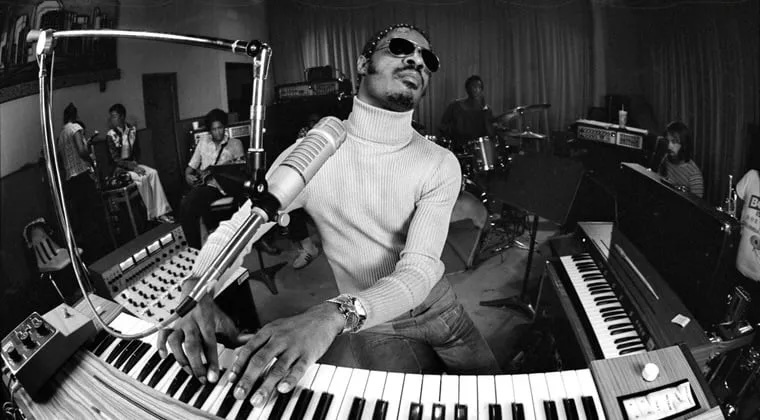
Wrapping up my four-week exploration/celebration of the major Black forces in all genres of American music to commemorate Black History Month with more notable and laudable voices, musicians, innovators and influencers. These are the trailblazers and the legacies filled with instinct and guile, but most of all courage, as every one of them strived to overcome hardship due to systemic racism to bring forth the most original and dynamic music of the age.
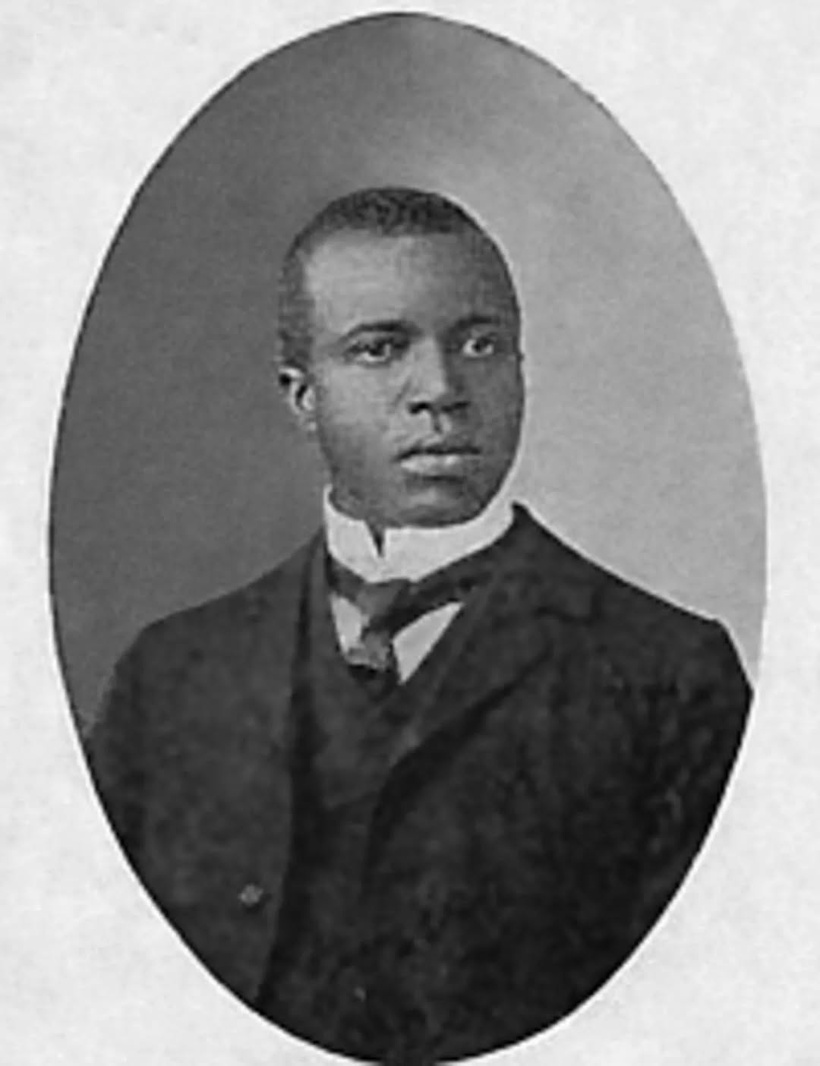
King of Ragtime
The irrepressible and prolific genius that was Scott Joplin composed more than 40 ragtime pieces, many wildly popular for his times (the turn of the century), including “Maple Leaf Rag,” a recording so immensely ingrained in the spirit and movement of the genre it is still considered quintessential.
Joplin was not only prolific, he considered ragtime as important as classical music and made sure his works were performed in theaters as opposed to the more ubiquitous saloons. To this end, he also penned a ragtime ballet, and two operas based on the style. I was introduced to Joplin through the film The Sting when I was a kid (thanx for taking me, Dad), as his music, adapted by Marvin Hamlisch, comprises its brilliant soundtrack. I was then moved to buy the single for Scott’s “The Entertainer,” which was a significant hit in 1973, reaching #3 on the Billboard Hot 100, some 70 years after Joplin released it.
When I was working on my 2024 book, Revolution – Prince, the Band, the Era, Joplin’s influence and wide-ranging musical brilliance hung heavy on the likes of someone with similar drive and purpose for multi-level virtuosity as Prince Rogers Nelson, whose father had taught him to revere.

Emily
The beautifully elegant and impossibly hip, Esperanza Emily Spalding, or as those close to her call her, Emily, is one of the great musical trendsetters of our time, balancing her art in a mixture of modern jazz, pop, and Hispanic soul, enveloping their best attributes to create something iridescent. Known for her virtuosity on double bass accompanied by smooth vocal stylings that act more as an orchestral instrument than simple communication, she started out as a child prodigy in Portland, Oregon, performing professionally as a violinist in the Chamber Music Society of Oregon at age five. Expanding her oeuvre, she was self-taught on guitar and bass, eventually earning academic scholarships to Portland State University and Berklee College of Music.
For much of the early 2000s, Esperanza released intricately delectable albums of variant styles, both original and covers, illustrating her delicate scatting techniques and showcasing her fluid bass melodies. On her eponymously titled second offering, she broke through (this is when I first heard her in 2008), providing an eclectic introduction to the music that would invade the charts by her third album, Chamber Music Society (2010), reaching #34 on the Billboard 200, and earning the first of her five Grammys Awards.
Success has provided Esperanza a larger audience in which to share her social and political stances against human trafficking and racism, much of which ends up in Radio Music Society, her 2012 album that features one of her most striking compositions, “City of Roses.” She’s also co-written two jazz operas and still records today at 41-years-old continuing to compose, record, and tour the world.
Mr. Everything
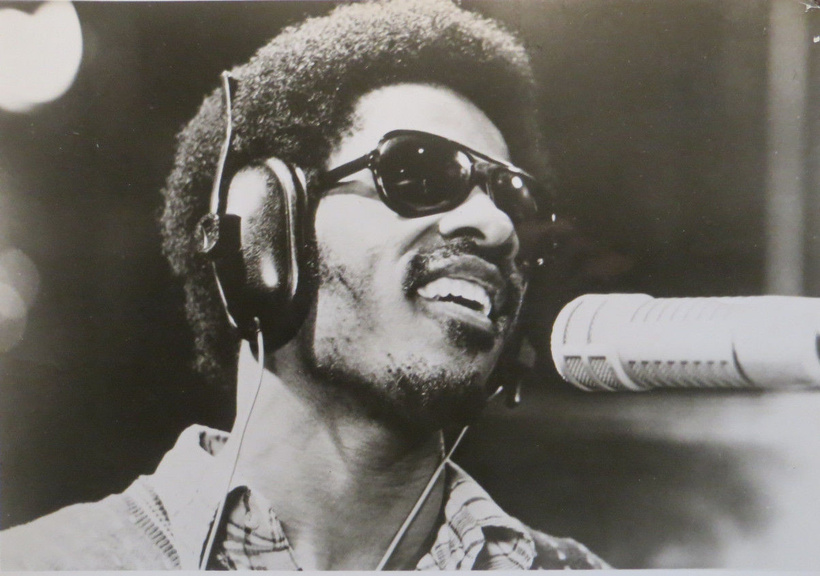
The one and only, multi-talented, groundbreaking composer, arranger, producer and dynamic singer, musician and performer, Stevie Wonder grew up in the music that would shape, lead and eventually dominate his lifetime, from rhythm and blues, rock and roll, soul, funk and modern pop. From the mid-1960s to today (with an unmatched run of albums in the early to later 1970s), Stevie expanded the sonic elements of every genre, bending several to his will and sifting them through the multi-colored prism of his genius.
Starting as Little Stevie Wonder at 13 years-old, playing harmonica and singing with a confidence of a 30 year-old, he was eventually promoted for the unique element of his blindness by a burgeoning Motown Records but soon shed that limiting marketing ploy to begin invading the soul and pop charts while flummoxing musicologists by surpassing many of his predecessors in intricate arrangements and elaborately produced tracks, Wonder played most if not all the instruments on his recordings to create a sound all his own.
I can discuss the hits – and they are many and varied – but his run of albums from 1972 through 1976 remains a pristine expression of the musical, social and personal in one. All of them masterworks: Music of My Mind, Talking Book – the latter featuring the groundbreaking, “Superstition,” which is one of the most distinctive and famous examples of the sound of his trusty Hohner Clavinet keyboard. Then Innervisions, Fulfilingness’ First Finale, and finally the sprawling double-album, Songs in the Key of Life, all of which won the Grammy Award for Album of the Year, making him the only artist to have won the award with three consecutive album releases.
There is not enough time or space to cover the immense contributions to the American musical landscape by the inimitable Stevland Hardaway Morris, aka Stevie Wonder.
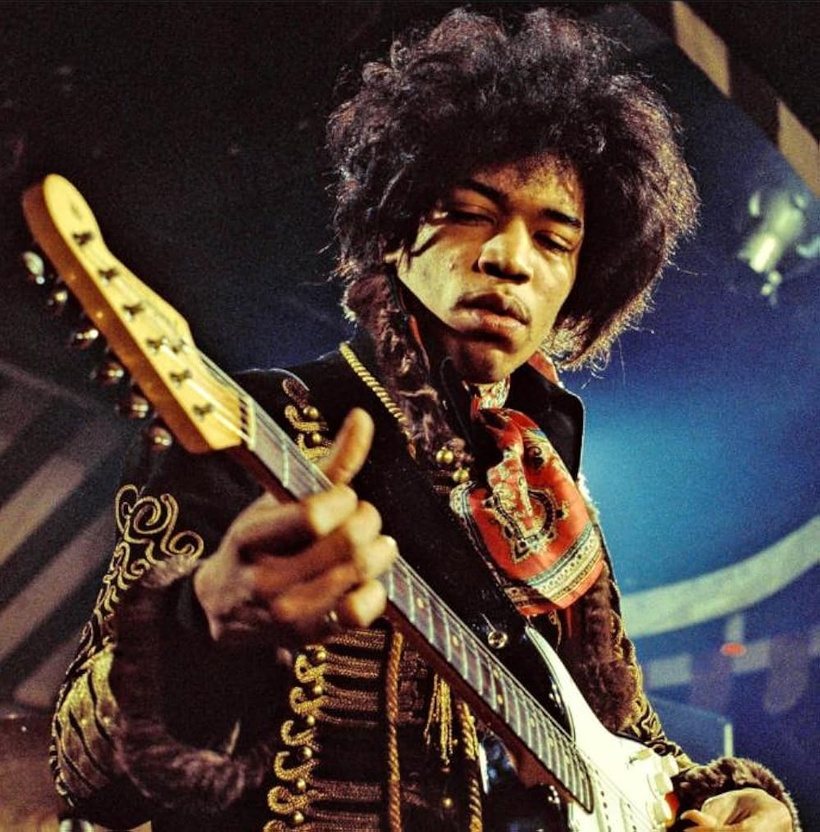
Jimi
The undisputed master of the electric guitar, Jimi Hendrix erected a sonic bridge from the explorations of his antecedents to an entirely new form of rock music. Wiping the slate clean and forging new territory for the instrument that forever changed popular music. There remains the demarcation – Before Jimi and After Jimi. And, in many ways, even “After” no one could produce, seduce or caress the sounds he approached from the mid 1960s until his tragic death at just 27 in 1970.
Having developed his early style of bombastic performance and feedback-induced mayhem while playing music in the Air Force, Jimi quickly became a sought-after player along the famed “Chittlin’ Circuit” that allowed Black musicians to connect with their audiences in the Jim Crow South. During this time, rich in woodshedding and expansion, Hendrix backed such lauded acts as Wilson Pickett, Slim Harpo, Sam Cooke, Ike & Tina Turner, and Jackie Wilson. Later he toured extensively with Little Richard and was a member of the Isley Brothers band.
Breaking free of the traditional blues/soul and early rock and roll of a previous era, Hendrix, performing under the name Jimmy James and the Blue Flames, began a residency in Greenwich Village’s Cafe Wa? but did not find an audience until he decamped to London, England and found a benefactor in the bassist for the British blues/pop band, the Animals, Chas Chandler. It was there, during the height of Swinging London that Jimi floored every major pop and rock artist, gaining a reverence unmatched by anyone, even the Beatles and the Rolling Stones during that time.
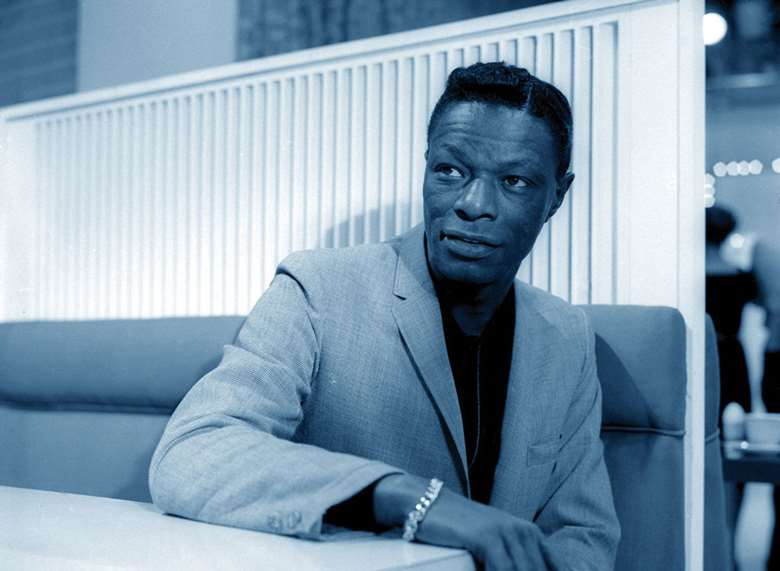
King
Synonymous with the holiday season, due to his classic rendering of “The Christmas Song” from 1960, Nathaniel Adams Coles aka Nat “King” Cole recorded an astonishing 100 hit songs during his near 40-year career. Making his name as a jazz pianist and the leader of the pre-war King Cole Trio, the first Black act on Capitol Records throughout the 1940s, he inspired dozens of jazz trios to follow. Nat would then kick off the following decade as a solo singer and part-time actor, eventually becoming the first Black artist to host a nationally televised variety series for NBC in the mid-fifties.
His sultry vocal deliveries crossed over to mainstream audiences in a time when Nat faced terrible racial discrimination on the touring circuit. Much of his notable output included one of the finest recorded songs of the era, “Unforgettable,” the playful, “Nature Boy,” “When I Fall in Love,” (my parents wedding song, although that one is by Johnny Mathis, but not as good – sorry, Mom), the tender ear-worm, “Mona Lisa,” John Lennon’s favorite song, “Stardust,” and the standard, “Embraceable You.”
But, of course, it’s Nat’s The Magic of Christmas – thanks to “The Christmas Song” that became the best-selling Christmas album released in the 1960s and sealed his legend. But if being forever connected to the most celebrated international holiday every year for as long as we’re all still around to do it, that’s a damn fine legacy.
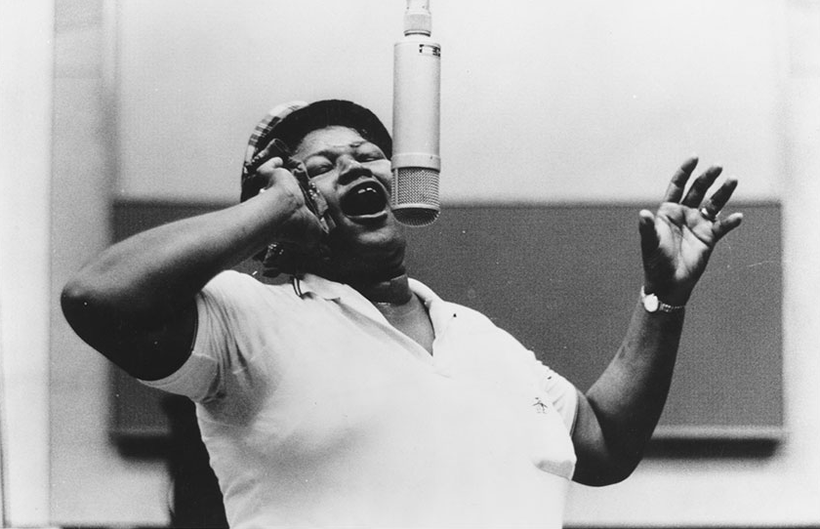
Big Mamma
The booming voice and ample countenance of the great Willie Mae “Big Mama” Thornton established her as the most influential and captivating woman blues shouter of the mid-20th century. Big Mamma was a force to reckoned with on and off stage. A brawler from Alabama in the hallowed Delta soil that birthed some of the most prominent blues artists of the era, she was the minority trifecta – Black, gay, and a woman in the Jim Crow South, and learned early the art of survival and battle to make her mark, and what a mark that turned out to be.
Willie Mae was the first (and still the best) to record the Leiber and Stoller classic, “Hound Dog” – a song specifically written for her. To listen to her belt out those first lines Yooouuuu ain’t nothin’ but a hound dawg… is to understand the woman’s hurt, defiance and humor all at once. Her hoots and hollers on that track and many of her ensuing recorded material were the precursor to all the great ad libs of the soon-to-come rock and roll, soul, funk and hip hop.
Big Mamma also put the blues classic, “Ball and Chain” on the map, bowling over a young Janis Joplin, who insisted on belting the song every time she stepped on stage as a homage to Thornton’s image of immovable strength – something Willie Mae displayed for another two decades before her death in 1984.
A true original in an arena dominated by men, Big Mamma was a revelation and revolution all in one.
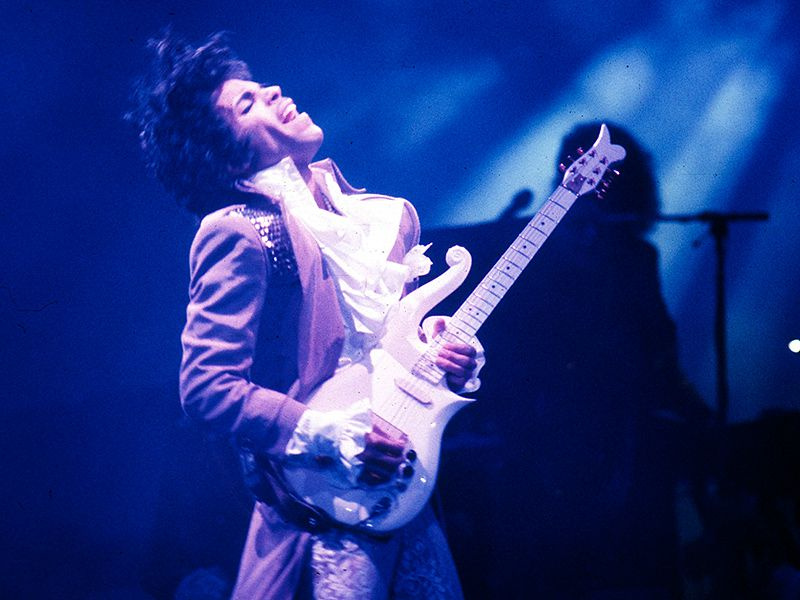
Prince
And now to the one-man revolution, Prince Rogers Nelson. And when asked why I gave my aforementioned book that title, one only needs to take a glance at the musical and racial barriers toppled by his thematic and colossal output. Composing, arranging, performing, and producing nearly every note of his singles and albums, many of them massive hits, he also wrote and produced for many other successful acts. But that is only part of Prince’s story, the rest is found in his dedication to stripping away labels, and allowing all artists, no matter the color of their skin, to reach beyond the music industry silos and reductive music critic frameworks to create something wholly new.
Signed to Warner Bros. records at just 19 as “the new Stevie Wonder,” he was granted complete control over his music, image and performing. He put together killer touring bands that worked their way up through the clubs, combining funk with punk and swagger with overt sexuality to bring his playfully salacious material to the masses. In this way, Prince was the first blatantly sexual artist to not hint or play with the subject, but face it head on without shame.
Although his halcyon period is the 1980s, with his triumphantly critical and financial successes in gems like Dirty Mind, 1999, Purple Rain, and Sign ‘O’ the Times Prince continued to forge uncharted paths to soundtrack films not of his own (there are four of those), like 1989’s Batman, triple-album epics, 1996’s Emancipation, and later create direct online releases. In fact, Prince became the first established artist to set a course for his independence by using the Internet in its earliest stages to present his music straight to his fans (whom he affectionately called fams).
Until his final breath taken far too soon at age 57, dying in his home/studio, Paisley Park, Prince made music that excited, challenged and even sometimes flummoxed popular music the way it always should be.
Recent Comments
Categories