Profonde Musique
August 18, 2026

There were better music writers than Dave Marsh. For mere word-skill and acute insight, my pen-pal, the legendary Greil Marcus comes to mind, as does Peter Gauralick, Lester Bangs, and recently Touré, Chuck Klosterman, and my dear friend Rob Sheffield for sure. There were more detailed researchers in the realm of what we do, like Guralnick, my pals Peter Ames Carlin and Alan Light, and certainly the current dean of music historians, Mark Lewisohn. For pure love of the subject, Anthony DeCurtis, Chuck Eddy, the late, great, Paul Nelson, my friend Tim Riley, and lately, Anne Powers. More important? Jon Landau, Robert Palmer. Bangs, and the monumental, Raph Gleason. And there were more insufferably smarmy ones too, like indeed Gleason, Gina Arnold and Robert Christgau. But Dave Marsh had his hand in all of these categories, and always juggled the keen observer, high-brow lecturer, and downright biting commentator in his work.
A Detroit native, Marsh was born to launch a magazine so distinctly Motor City as CREEM it reeked of exhaust; pound for pound the best rock music magazine that ever was. He was nineteen. For kids like me, CREEM did not lean into the Sixties edict of “keepers of the flame” at first. It got there eventually when punk and hip hop crashed in, but this is how you know you’re not a Boomer, when you chose CREEM over Rolling Stone. Although the latter had its place for Seventies kids, and Marsh also plied his trade (like all writers wanting to make a buck) at Rolling Stone, CREEM was the voice of the rock youth market, and right in the middle of that voice and at times the voice at CREEM was Dave Marsh.
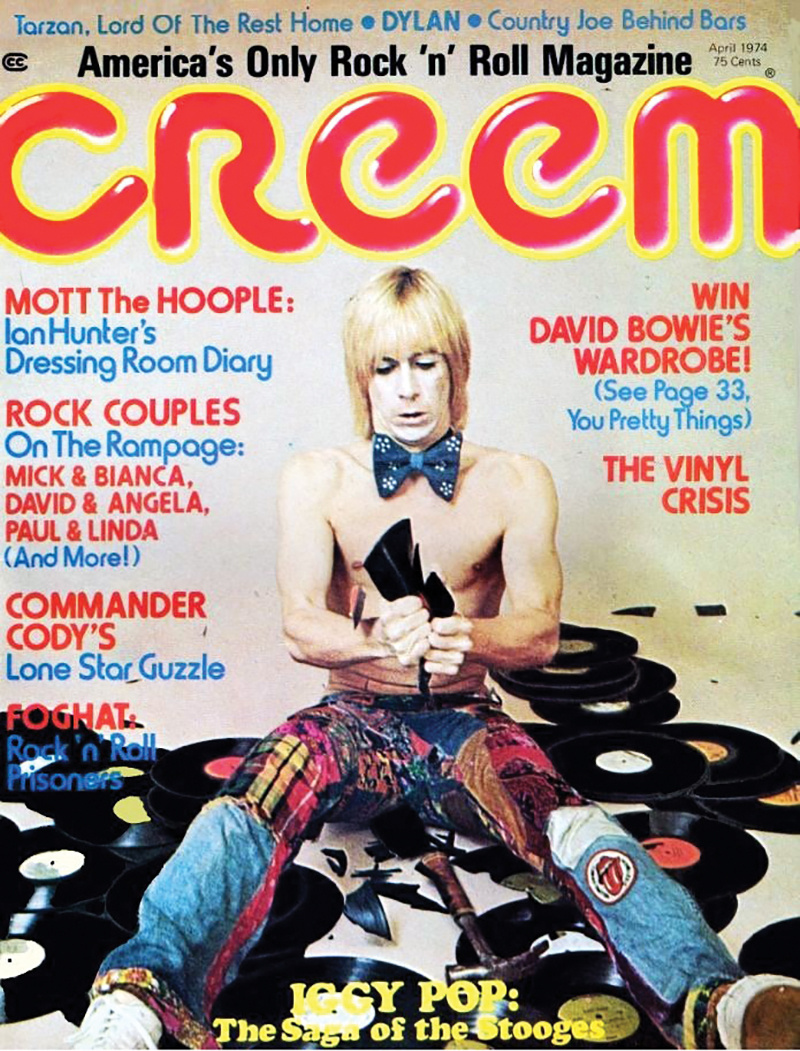
Marsh wrote stories, sure, he did interviews and added commentary, but where his head was at was reviews – mostly record reviews, where he could shine and dim, sometimes concurrently. He wrote one of the finest and most important reviews of Warren Zevon’s career, exclaiming all the right things about Zevon’s Excitable Boy in 1978 before it blew up, but in the same year his scathing and wildly erroneous review of Queen’s brilliant, Jazz read more like a personal attack than honest assessment. But then, like all of us, Marsh had his prejudices. There was music he prized above all, and bombastic rock played with panache and humor did not suit him (he infamously despised Journey for the same reasons). Marsh loved doo-wop, soul, funk, and later hip hop. He was one of those White writers who championed Black music more than most, yet concentrated on the artists that nicked enough of its style to not be painfully Caucasian like Elvis Presley and Bruce Springsteen.
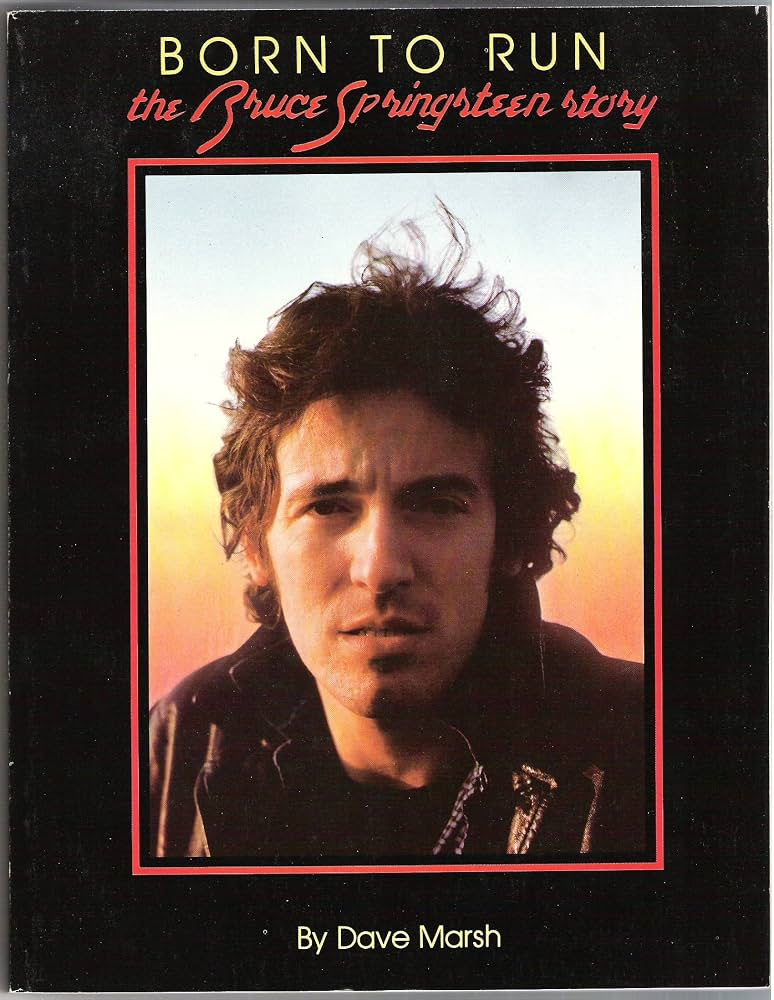
Marsh, as Bruce wrote upon his death this week, was the first to pen a serious book about him, Born to Run: The Bruce Springsteen Story, published in 1979, before Springsteen did anything remotely important (Nebraska) or wide-reaching (Born in the U.S.A.). Despite the career-saving and perhaps career-defining Born to Run, Bruce was still a New Jersey product, a proud member of an underground club hobnobbing with Patti Smith at Max’s or Southside Johnny down at the Stone Pony. Even though he broiled with higher ambitions for himself and the music, Marsh saw something in the post Darkness at the Edge of Town pre–River Bruce Springsteen many missed, including his manager and former music critic, Jon Landau: a lasting American worshipper of nostalgia and egalitarianism, the Moses of rock and roll, perhaps not merely its “future” but its foundation.
But no one loved Sly and the Family Stone more than Dave Marsh. Not even Sly himself. His essay on the band in what was in my High School years the Bible of music writing and music lineage, The Rolling Stone Illustrated History of Rock and Roll (where for a while I put every concert ticket stub) is quintessential reading for anyone attempting to do this gig. Marsh gushes, sure, but then spreads the word without compromise. This is the balance of the music writer. Stone was a complicated man until his death, but in his heyday was woefully underrated as a true multi-instrumental, lyrical innovator and band-leader nonparallel, setting the mold for the maturing Stevie Wonder and, of course, later, Prince. Like Springsteen, Marsh intuited things about Stone and his work that was not as obvious to many, or many perhaps did not take the time to contemplate. For that he should be remembered fondly. His plaudits were prescient. A true talent-set not as highly prized by a bunch of the above writers I mentioned.
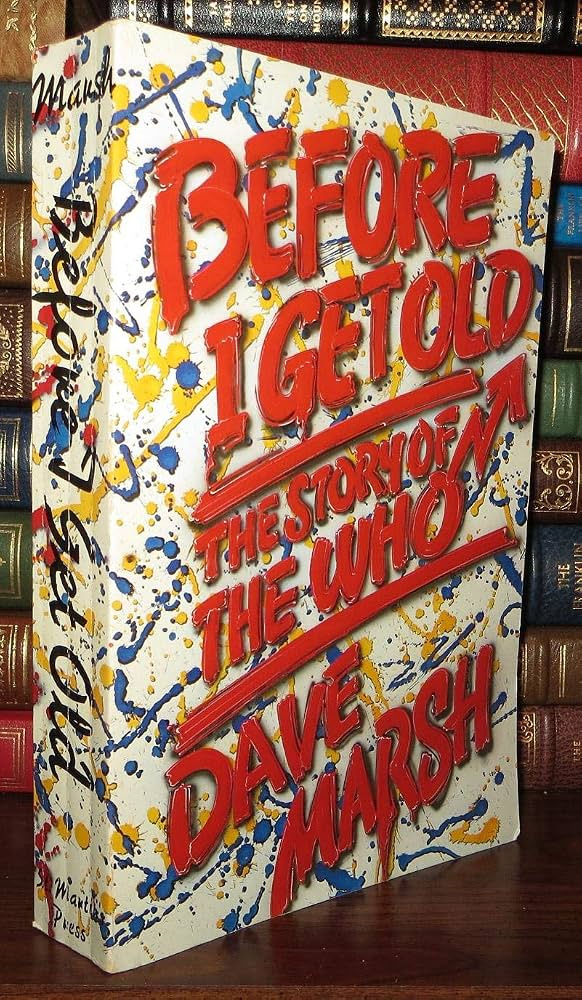
However, Marsh’s two greatest contributions to the cause in my humble opinion, are a pair of seminal books that influenced my writing when I was twenty and much later at fifty-nine. The former, Before I Get Old: The Story of The Who is the finest telling of that band’s story. Trust me, I read a bunch of them. That was the first for me and taught me straight away three key things about music storytelling – be earnest, be entertaining, and be funny. The rest takes care of itself. Marsh captures in that book the very essence of the Who, four post-war English kids that failed to share a single personal trait in comportment, musical taste, or technical mastery, but when formed into a unit could make some of the most gloriously menacing and terribly exciting music ever attempted by anyone practicing the genre. Marsh unfurls an aural narrative, something that all music authors are trying desperately to achieve. He taught me right then that the key to the job is to put into words the impossible – the visceral, the ineffable, what either Ray Charles or Elvis Costello once mused, “Writing about music is like dancing to architecture.”
The second book that helped me immeasurably once I decided to attempt the most insane thing of all, writing a book about one song, is Louie Louie: The History and Mythology of the World’s Most Famous Rock ‘n Roll Song (the subtitle goes on and on, but I’ll spare ya). Again, Marsh handled the idea differently than most. I read about a half-dozen books about one song (Greil Marcus wins again with his stirring Like a Rolling Stone: Bob Dylan at the Crossroads, which is one of the finest compendiums of music writing imaginable), and Marsh’s was an original take – both historical perspective and ideological perception. I was glad to have his take, which I nonetheless ignored but that is the writer’s prerogative. You scan the way some will approach a subject to avoid repeating it. This was not a problem. Marsh was his own man.
I had my issues with him, of course, as opinionated folks with differing viewpoints – also part of the gig. Marsh was one of the leading voices to keep KISS out of the Rock and Roll Hall of Fame (the existence of which is one of the great jokes in the history of Hall of Fames). He provided no evidence for this. Just didn’t think they were a band. Not sure what that meant, but he stuck to it. It was seemingly always personal for Marsh (he married Springsteen’s co-manager), whether championing someone he “believed” in or attacking those he didn’t. He could not escape being the ultimate zealot or irritant. Kind of his thing. Everyone has to have one.
I didn’t know Dave, who passed this week at 76, but I am sure he’d be happy with that last sentence.
Recent Comments
Categories